Swiset Powers Bullfy Trading Tournaments with Gamification Infrastructure
A well-designed competition gives brokers a way to create visible progress, repeated participation, and measurable trader behavior.
trading competitions
trading tournament
white label
competitions software
technology for trading competitions
how to create trading competitions
how to do a trading tournament
demo trading competitions software
white label live trading tournament platform
poker a like trading competitions
Trading competitions are becoming one of the most effective ways for brokers, prop firms, and trading communities to improve trader engagement.
Why? Because they combine competition, community, recognition, and participation into a single experience.
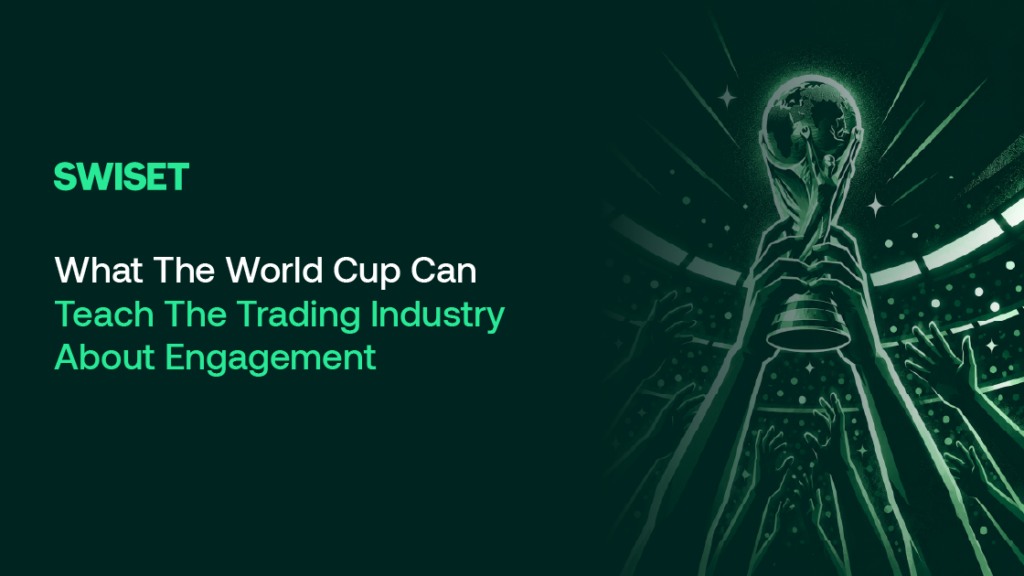
Global sports events like the World Cup show how powerful these engagement systems can be. They bring people together through identity, rankings, narratives, and shared emotional investment. In many ways, the same mechanics can be applied to the trading industry.
As trading platforms compete for attention, retention, and long-term loyalty, many are moving beyond static dashboards and purely transactional experiences. They are starting to build more interactive environments where traders do not just use a platform, they participate in it.
• Trading competitions help increase trader engagement and retention
• Gamification can make trading platforms more interactive and community-driven
• Leaderboards, rankings, and challenges encourage recurring participation
• Brokers and prop firms can use competitions to strengthen acquisition and re-engagement
• The future of trader engagement is likely to be built around participation ecosystems, not just platform features
Trading competitions are structured events where traders compete against each other over a defined period based on metrics such as profitability, consistency, drawdown control, or risk-adjusted performance.
These competitions can be used by brokers, prop firms, educators, and trading communities to create stronger engagement loops around participation. Instead of offering only access to charts, execution, or account features, they create reasons for users to return, compare performance, and interact with a broader community.
For years, trading platforms competed mostly on utility. Their positioning was built around:
• Execution speed
• Spreads
• Liquidity
• Platform stability
• Access to instruments
These factors still matter. But they are no longer enough on their own.
Modern traders, especially digital-native users, increasingly expect more than functionality. They expect a stronger experience. They want progress, visibility, recognition, and a sense of participation.
This shift is important because acquisition alone does not create a durable business. If users sign up but do not stay active, the ecosystem remains weak. Real growth comes from combining acquisition with retention, activity, and community participation.
That is where trading competitions become strategically valuable.
The World Cup is not just a football tournament. It is one of the strongest engagement systems in the world.
Every four years, billions of people connect through teams, identity, rivalry, narratives, predictions, rankings, and shared moments. Fans do not just watch. They participate emotionally.
That is what makes the World Cup so powerful from an engagement perspective.
The key lesson for the trading industry is that these behaviors are not exclusive to sports. They are participation mechanics. And those same mechanics can be adapted to trading environments.
1. Identity Creates Emotional Participation
People are more engaged when they feel connected to something larger than themselves.
In sports, this happens through countries, clubs, and players. In trading, it can happen through:
• Trading communities
• Broker brands
• Prop firms
• Teams
• Public competitions
• Shared challenges
Once identity becomes part of the experience, engagement becomes less transactional and more emotional.
2. Competition Creates a Reason to Return
Competition is one of the strongest behavioral drivers in any digital environment.
Leaderboards, rankings, brackets, and performance comparisons create ongoing motivation. They give users a reason to check back, improve, compare, and participate more often.
This is one of the reasons trading competitions can be effective for:
• User activation
• Retention
• Re-engagement
• Community participation
• Platform activity growth
Competition transforms passive users into active participants.
3. Social Interaction Strengthens Retention
Sports are rarely experienced in isolation. People share predictions, discuss results, celebrate wins, and debate outcomes.
Trading is increasingly moving in the same direction.
Discord groups, Telegram communities, trading X, and live competition formats have made trading more social. Platforms that understand this shift early can build stronger long-term engagement because they are not only offering a tool. They are creating an environment people want to be part of.
Gamification in trading does not mean turning trading into a game. It means applying participation systems that increase user interaction in a responsible way.
These systems may include:
• Leaderboards
• Achievements
• Rankings
• Progression systems
• Seasonal competitions
• Team-based formats
• Branded visual identities
• Public recognition
When implemented well, these elements can make trading platforms feel more interactive, more immersive, and more community-driven.
This is particularly important in an industry where attention is difficult to retain and user churn can be high.
One of the biggest shifts in the trading industry is the move from platform-centric experiences to community-centric experiences.
Users increasingly want:
• Shared experiences
• Social recognition
• Personalized participation
• Interactive environments
• Public visibility
• Competitive narratives
This helps explain why customizable trading competitions are becoming more relevant.
Communities no longer want generic campaigns or isolated promotions. They want experiences that reflect their identity, audience, and culture. For brokers and prop firms, this creates an opportunity to build stronger ecosystems around engagement rather than relying only on product functionality.
Trading competitions work because they combine multiple engagement drivers at once.
They can introduce:
• Competition
• Identity
• Progress tracking
• Recognition
• Narrative
• Social interaction
• Repeat participation
For example, a trading competition can allow traders to represent a team, compete in seasonal challenges, track their place on a leaderboard, and participate in a shared event that feels bigger than an individual account.
That creates a deeper experience than a static ranking table alone.
The result is not only more activity. It is stronger participation.
Bring the energy of the world’s biggest football tournament into trading.
Trading competitions can support more than brand awareness. They can also be used as operational growth tools.
Brokers and prop firms can use them to:
• Increase user activation after sign-up
• Improve trader retention
• Build re-engagement campaigns
• Strengthen community participation
• Create social sharing moments
• Support product differentiation
• Generate themed marketing campaigns
• Encourage recurring platform activity
A well-designed competition can become more than a one-time promotion. It can become part of a broader engagement strategy.
The next generation of trading platforms will likely look different from traditional models.
The winners may not only be the firms with the most features. They may be the firms that create the strongest participation ecosystems.
That is the real lesson behind community-driven engagement.
Technology still matters. Execution still matters. Product quality still matters.
But in a crowded market, experience matters too.
And the platforms that successfully combine trading competitions, gamification, identity, and social participation will be in a stronger position to capture attention and keep users engaged over time.
Trading competitions are no longer just promotional campaigns. They are becoming engagement systems.
For brokers, prop firms, educators, and trading communities, the opportunity is clear: create experiences that users want to return to, not just tools they can access.
The World Cup shows how powerful participation becomes when identity, competition, and community work together.
The trading industry is beginning to adopt the same logic.
And that shift may define the future of trader engagement.
Whether you’re a broker, prop firm, educator, or trading community, you can now create competitive experiences your audience actually wants to be part of.
Trading competitions are structured events where traders compete against one another based on performance metrics such as profitability, consistency, or risk management over a set period.
They are becoming more popular because they increase engagement, participation, and retention. They also help transform trading from an individual activity into a more interactive experience.
They improve trader engagement by adding competition, rankings, recognition, and recurring participation loops that encourage traders to return more consistently.
Gamification helps brokers and prop firms create more interactive user experiences through features like achievements, leaderboards, challenges, and progression systems.
Yes. Well-structured competitions can improve retention by giving users a reason to stay active, track progress, and participate in a broader community experience.
Leaderboards create visibility, comparison, and recognition. They help motivate users to stay active and improve their standing over time.

A well-designed competition gives brokers a way to create visible progress, repeated participation, and measurable trader behavior.

A well-designed competition gives brokers a way to create visible progress, repeated participation, and measurable trader behavior.

A well-designed competition gives brokers a way to create visible progress, repeated participation, and measurable trader behavior.
Over the past few years, prop firms have become one of the fastest-growing business models in the trading industry.

A well-designed competition gives brokers a way to create visible progress, repeated participation, and measurable trader behavior.

Why Are Brokers Starting Their Own Prop Firms? Linkedin Huge-global Youtube Over the past few

Do Prop Firms Use Real Money?- The prop firm business model explained (without the myths)

How to choose a Tech Provider for your Prop Firm And why prop firms switch

CXM Partnership Announcement | Swiset Content CXM is pleased to announce a new strategic partnership

How Brokers Are Rethinking Value Beyond Pricing and Execution Why differentiation in brokerage is shifting
| Cookie | Duration | Description |
|---|---|---|
| cookielawinfo-checkbox-analytics | 11 months | This cookie is set by GDPR Cookie Consent plugin. The cookie is used to store the user consent for the cookies in the category "Analytics". |
| cookielawinfo-checkbox-functional | 11 months | The cookie is set by GDPR cookie consent to record the user consent for the cookies in the category "Functional". |
| cookielawinfo-checkbox-necessary | 11 months | This cookie is set by GDPR Cookie Consent plugin. The cookies is used to store the user consent for the cookies in the category "Necessary". |
| cookielawinfo-checkbox-others | 11 months | This cookie is set by GDPR Cookie Consent plugin. The cookie is used to store the user consent for the cookies in the category "Other. |
| cookielawinfo-checkbox-performance | 11 months | This cookie is set by GDPR Cookie Consent plugin. The cookie is used to store the user consent for the cookies in the category "Performance". |
| viewed_cookie_policy | 11 months | The cookie is set by the GDPR Cookie Consent plugin and is used to store whether or not user has consented to the use of cookies. It does not store any personal data. |
Select the type of Demo you want to request