Prop Firm Launch Checklist: What You Need Before Going Live

trading competitions
trading tournament
white label
competitions software
technology for trading competitions
how to create trading competitions
how to do a trading tournament
demo trading competitions software
white label live trading tournament platform
poker a like trading competitions

Quick answer

A prop firm needs more than a website and a trading platform to launch successfully. Before going live, a prop firm should define its business model, validate its legal structure, design and test its challenge rules, connect its technology stack, automate account creation, monitor risk and fraud, integrate payments and KYC, establish a payout process, and test the complete trader journey.

The goal is not only to launch. The goal is to build a prop firm that can operate reliably, protect trader trust, and scale without creating excessive manual work.

What is a prop firm launch checklist?

A prop firm launch checklist is a structured list of the business, technology, risk, compliance, payment, and operational requirements that a proprietary trading firm should complete before accepting customers.

The checklist helps founders answer three questions:

  1. Is the firm ready to sell challenges?

  2. Can the firm operate those challenges accurately and transparently?

  3. Can the infrastructure support more traders without increasing operational risk at the same rate?

Prop firm launch requirements at a glance

AreaWhat must be ready before launch
Business modelTarget market, pricing, acquisition costs, pass rates, payout obligations, and cash reserves
Legal and complianceCorporate structure, terms, disclosures, data protection, KYC, and regional requirements
Challenge designProfit targets, drawdowns, daily loss, trading days, exposure limits, and payout rules
Trading infrastructureTrading platform, account creation, data synchronization, APIs, and contingency plans
Risk managementAccount-level and aggregate exposure monitoring, alerts, limits, and escalation procedures
Fraud preventionDetection rules, evidence, case management, decisions, and appeals
Payments and KYCCheckout, payment confirmation, refunds, chargebacks, identity verification, and sanctions checks
Trader experienceRegistration, credentials, dashboards, progress tracking, support, and notifications
Payout operationsEligibility, reviews, approval levels, payment methods, timing, and dispute handling
Launch testingEnd-to-end tests, stress scenarios, incident ownership, and go/no-go criteria

1. Define the prop firm business model

The legal and regulatory treatment of a prop firm depends on its jurisdiction, customer locations, product structure, marketing, and whether trading is simulated or live.

Before launch, obtain qualified advice about:

  • Corporate structure.

  • Operating and restricted jurisdictions.

  • Customer terms and risk disclosures.

  • Marketing and financial promotion rules.

  • Privacy and data protection.

  • Identity verification and sanctions screening.

  • Consumer complaints and dispute resolution.

  • Tax and accounting obligations.

  • Contracts with technology, payment, and trading providers.

The rules shown on the website must match the rules calculated by the platform. Differences between legal terms, marketing copy, and system behavior can create disputes and damage trust.

Launch question: Do the website, terms, challenge configuration, and internal procedures describe the same product?

Prop firm challenge rules define how traders pass, fail, and become eligible for a funded account or payout. Every rule also affects trader behavior, support demand, risk exposure, and profitability.

Common challenge rules include:

  • Profit target.

  • Maximum daily loss.

  • Maximum total loss.

  • Static or trailing drawdown.

  • Minimum trading days.

  • Consistency requirements.

  • Position-size and exposure limits.

  • News, overnight, and weekend trading policies.

  • Inactivity limits.

  • Profit split and payout cycle.

Each rule should have a written definition, a calculation method, a reset time, a timezone, and examples of normal and edge cases.

Launch question: Can the firm explain exactly why an account passed or failed using data from the system?

4. Connect the prop firm technology stack

A prop firm technology stack is the collection of systems used to sell challenges, create trading accounts, enforce rules, monitor risk, verify customers, process payouts, and manage traders.

A typical stack may include:

  • Commercial website.

  • Ecommerce or checkout system.

  • Payment gateway.

  • Customer relationship management system.

  • Trader dashboard.

  • Admin dashboard.

  • Trading platform.

  • Account-creation service.

  • Challenge-rule engine.

  • Risk and fraud tools.

  • KYC provider.

  • Payout system.

  • Email and notification services.

  • Analytics and reporting.

These systems should exchange consistent data through reliable integrations or APIs. The firm should also know which business processes depend on each provider.

Launch question: If one critical provider becomes unavailable, does the team have a documented contingency plan?

5. Automate account creation and rule validation

Account creation should begin automatically after a confirmed payment or approved internal action. The system should generate the correct account type, balance, platform credentials, challenge configuration, and customer communication.

The rule engine should continuously evaluate trading activity against the rules assigned to each account.

Test:

  • Successful, failed, duplicate, and delayed payments.

  • Account creation and credential delivery.

  • Balance and equity calculations.

  • Daily reset time and timezone.

  • Open positions at the violation threshold.

  • Commissions, swaps, and balance adjustments.

  • Pass, fail, reset, and funded-account transitions.

  • Evidence retained for account disputes.

Launch question: Can an account move from purchase to active challenge without a team member performing a manual task?

6. Establish risk management and fraud detection

Prop firm risk management is the process of monitoring trader behavior, account exposure, portfolio concentration, and potential payout liabilities.

The firm should define:

  • Exposure limits by account, trader, instrument, and strategy.

  • Alerts for concentrated or correlated positions.

  • Criteria for manual review.

  • Authority to restrict or close accounts.

  • Escalation procedures.

  • Records required to support decisions.

  • Monitoring of payout obligations and reserves.

Fraud controls may need to identify prohibited copy trading, coordinated accounts, shared devices, identity inconsistencies, payment abuse, or other behavior that violates the firm’s terms.

Every alert should enter a documented case-management process with evidence, ownership, review notes, a decision, and an appeal path where applicable.

Launch question: If multiple funded accounts execute the same strategy at the same time, how quickly can the team identify and evaluate the exposure?

7. Integrate payments and KYC

The payment flow should support the target market and automatically send the correct status to the rest of the prop firm infrastructure.

Before launch, confirm:

  • Supported countries, currencies, and payment methods.

  • Settlement schedules and provider reserves.

  • Payment-success and payment-failure workflows.

  • Duplicate-payment prevention.

  • Refund and chargeback procedures.

  • Reconciliation between orders and accounts.

  • Backup options for payment interruptions.

KYC requirements should be introduced at a clearly defined stage. Traders should know what verification is required before they reach the payout process.

Test document approval, rejection, duplicate identities, unsupported countries, inconclusive checks, and manual reviews.

Launch question: Does each payment and verification result trigger the correct account, communication, and internal workflow?

9. Define the payout process

A prop firm payout process determines when a trader is eligible, which reviews are required, who approves the request, and how the payment is completed.

Document:

  • Eligibility rules.

  • Available payout windows.

  • KYC requirements.

  • Risk and fraud review criteria.

  • Approval levels.

  • Payment methods.

  • Expected processing time.

  • Trader notifications.

  • Rejected payout and dispute procedures.

  • Reconciliation and recordkeeping.

Payout status should be visible and understandable to both the trader and the internal team.

Launch question: Can the team trace a payout from eligibility to completed payment and explain every decision made during the process?

10. Run an end-to-end launch test

An end-to-end launch test simulates the complete customer and operational journey before the firm begins high-volume acquisition.

Test the prop firm using different devices, browsers, account types, payment outcomes, trading behaviors, rule violations, identity results, and payout scenarios.

The final test should confirm:

  • Website and checkout performance.

  • Account creation.

  • Credential and email delivery.

  • Trading data synchronization.

  • Challenge-rule calculations.

  • Risk and fraud alerts.

  • Payment and KYC workflows.

  • Payout eligibility and approval.

  • Analytics and reporting.

  • Support escalation.

  • Data backup and incident recovery.

Define go/no-go criteria before testing. Critical failures in payments, account creation, rule validation, security, or payouts should prevent the public launch until they are resolved.

Launch question: Has the team completed and documented a full launch simulation with an owner assigned to every unresolved issue?

Complete prop firm launch checklist

Complete prop firm launch checklist

  • The target trader and initial markets are defined.


  • Unit economics and stress scenarios have been modeled.


  • Legal, compliance, and customer terms have been reviewed.


  • Challenge rules have written definitions and tested calculations.


  • The website, payments, trading platform, dashboards, and APIs are connected.


  • Account creation and credential delivery are automated.


  • Challenge rules are monitored in real time.


  • Account and portfolio risk can be reviewed from one system.


  • Fraud alerts have a documented case-management process.


  • Payments, refunds, and chargebacks have been tested.


  • KYC is integrated at a clearly defined stage.


  • The complete trader journey has been tested.


  • Internal teams have role-based access to the information they need.


  • Payout eligibility, reviews, approvals, and communications are documented.


  • Support and incident-management procedures are ready.


  • Backup and provider-contingency plans are documented.


  • A controlled end-to-end launch test has been completed.

Book a Prop Firm Readiness Review

Identify missing workflows, critical dependencies, and opportunities for automation before launch or migration.

Frequently asked questions about launching a prop firm

A prop firm typically needs a website, checkout, payment gateway, trader dashboard, admin dashboard, trading platform, automated account creation, challenge-rule engine, risk monitoring, fraud detection, KYC, payouts, notifications, and reporting. These systems should exchange consistent data through secure integrations or APIs.

No. A trading platform allows traders to place trades, but it does not necessarily manage the full business. The prop firm still needs payments, account provisioning, rule validation, risk controls, fraud detection, KYC, payouts, customer support, and administrative reporting.

The timeline depends on the firm’s legal preparation, product complexity, provider selection, integrations, branding, and testing. A faster technical setup does not eliminate the need to validate legal terms, payment flows, challenge calculations, risk controls, and payout procedures before launch.

A new prop firm should prioritize repetitive and high-risk workflows: payment confirmation, account creation, credential delivery, challenge-rule validation, risk alerts, KYC status, payout eligibility, and customer notifications.

The main risks include an untested business model, unclear or inconsistent challenge rules, payment interruptions, chargebacks, weak risk controls, fraud, incorrect account validation, delayed payouts, provider dependency, regulatory exposure, and poor trader communication.

Related Posts

prop firm launch checkllist
Blog

Prop Firm Launch Checklist

Use this 10-step prop firm launch checklist to prepare your business model, technology, risk, payments, payouts, compliance, and trader experience.


Blog

B2B trading technology

From Trading Journal to B2B Technology: The Evolution of Swiset Linkedin Huge-global Youtube trading competitionstrading

Blog

Trading Championships

Trading Championships: A New Way to Build Multi-Stage Trading Competitions Linkedin Huge-global Youtube trading competitionstrading

Blog

API For Prop Firms

Prop Firm API: How to Build a Custom Prop Firm Without Developing the Entire Backend
Blog

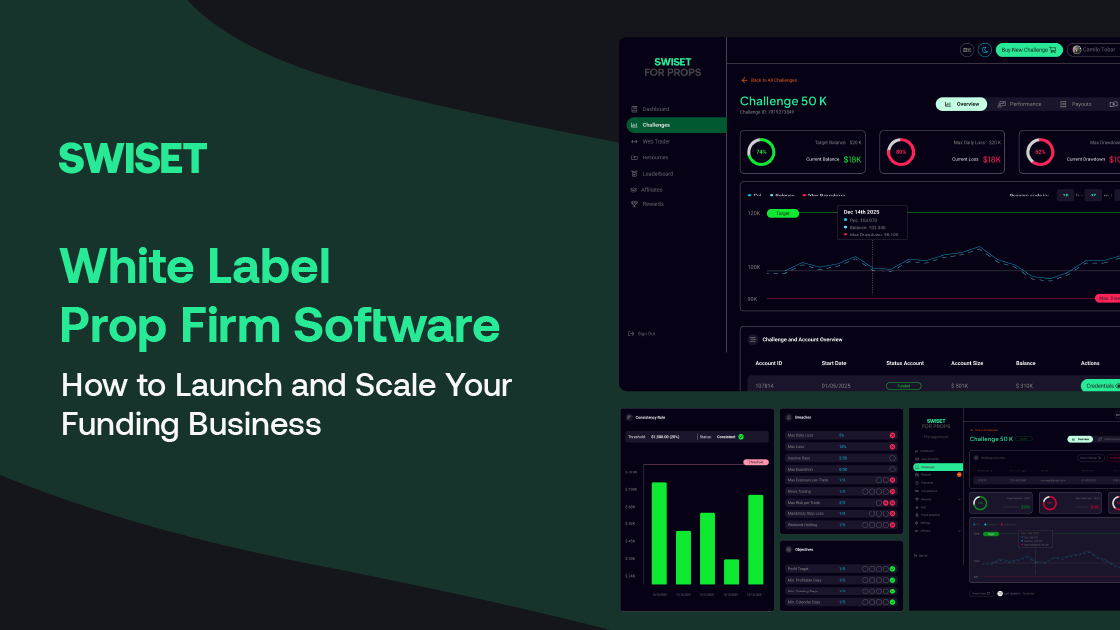
White Label Prop Firm Software

For brokers, acquisition is becoming more competitive, more expensive, and harder to convert. While demo tournaments are strong for acquisition, live trading tournaments can support activation and deposits.
Blog

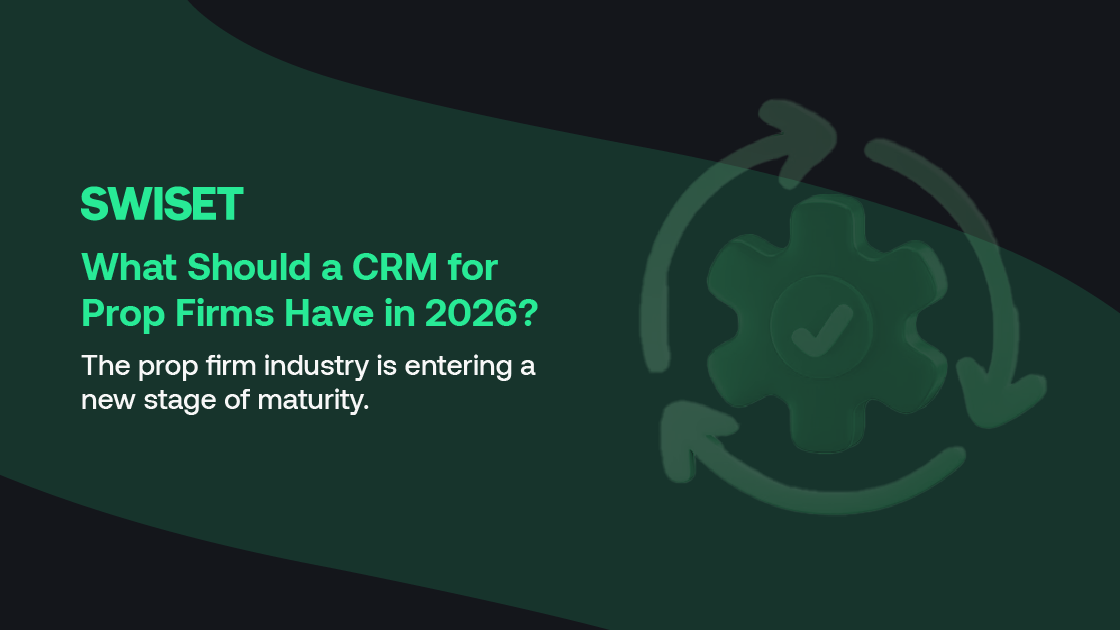
Forex Broker Technology

Forex broker technology refers to the collection of software, automation tools, integrations, and user experiences that power a brokerage beyond the trading platform itself.
image for blog "what is a trading competition" swiset ranking on right
Blog

What Is a Trading Competition?

A well-designed competition gives brokers a way to create visible progress, repeated participation, and measurable trader behavior.