Swiset partners Bullfy Trading Competitions with Gamification
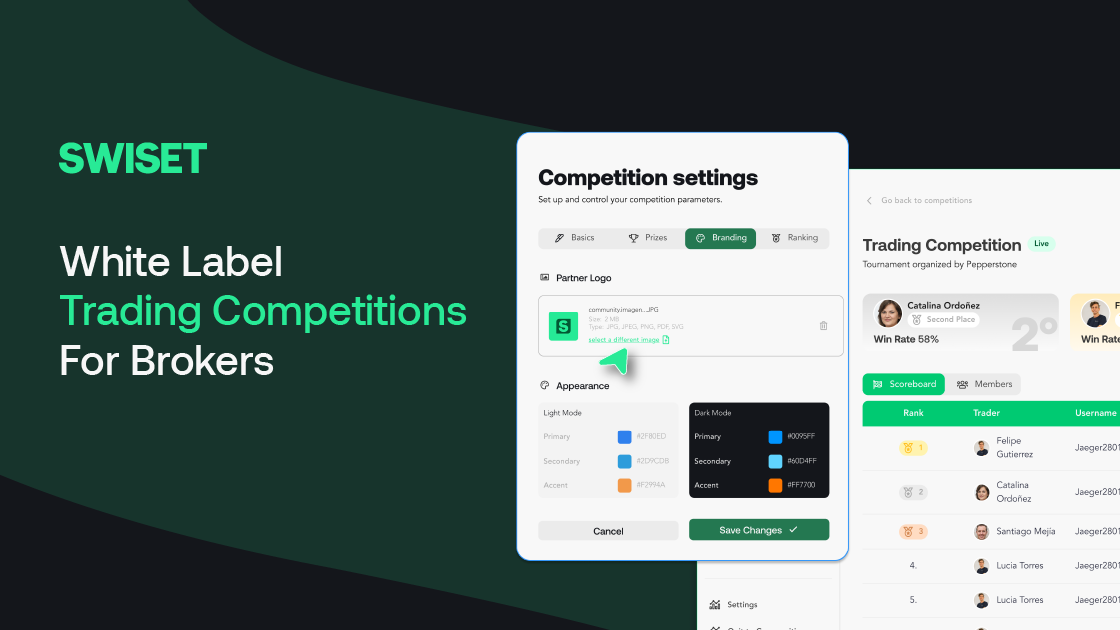
A well-designed competition gives brokers a way to create visible progress, repeated participation, and measurable trader behavior.
trading competitions
trading tournament
white label
competitions software
technology for trading competitions
how to create trading competitions
how to do a trading tournament
demo trading competitions software
white label live trading tournament platform
poker a like trading competitions
Swiset didn’t start as a B2B technology provider.
It started much closer to the trader.
With a simple question: how can traders better understand their own performance?
That question led to a trading journal.
But as Swiset grew, so did the problems we were trying to solve.
What began as a tool for individual traders gradually became infrastructure for communities, brokers, prop firms, and other businesses across the trading ecosystem.
This is how that evolution happened.
The first version of Swiset was built around one fundamental need: helping traders make better decisions through their own data.
Trading generates enormous amounts of information—entries, exits, instruments, risk, timing, performance—but much of that information is difficult to turn into something useful.
The trading journal became the first layer.
Instead of looking only at profit and loss, traders could analyze their behavior, identify patterns, track performance, and understand what was actually happening behind their results.
This stage gave Swiset something that would later become fundamental to everything we built:
a deeper understanding of trading behavior and trading data.
As more traders started using Swiset, another pattern became clear.
Trading rarely happens in isolation.
Traders learn inside communities. They follow educators, participate in challenges, compare performance, share strategies, and look for ways to measure their progress against others.
So the product began expanding beyond personal analytics.
Communities needed tools to manage traders, create experiences, and generate engagement around trading.
That led Swiset into a new layer of the ecosystem: trading competitions and community infrastructure.
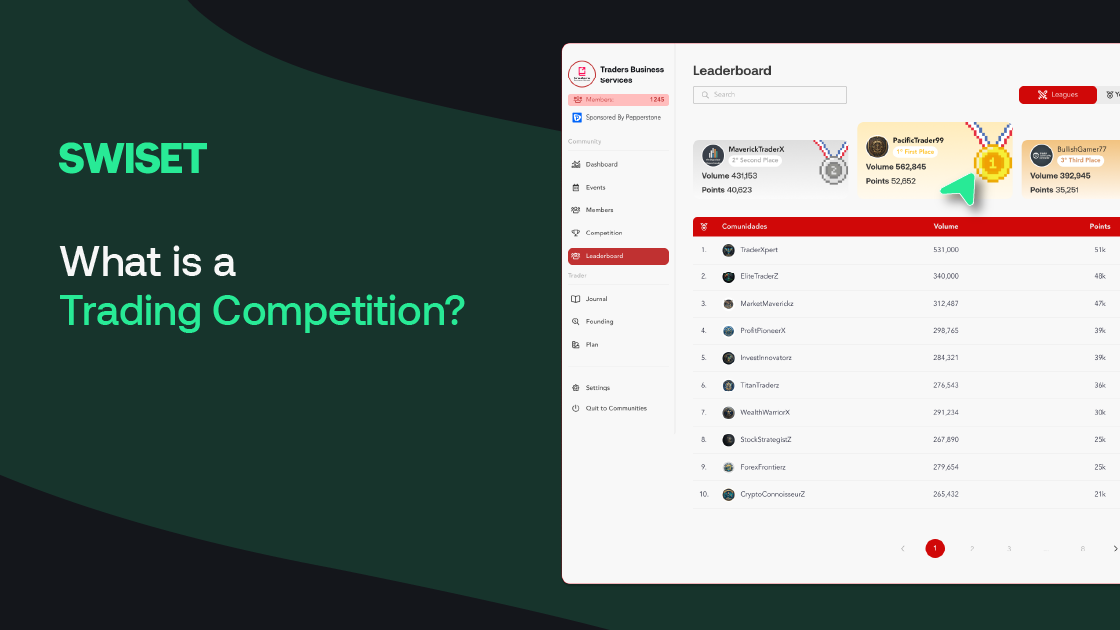
Leaderboards, tournaments, performance tracking, and competitive experiences transformed trading data into something social.
The journal helped traders understand themselves.
Competitions helped them interact with an ecosystem.
What started as an engagement tool quickly revealed a much larger opportunity.
Competitions weren’t only useful for communities.
Brokers could use them to acquire traders.
Partners could use them to activate their audiences.
Educators could create more engaging experiences.
And trading businesses could connect acquisition, engagement, and trading activity inside the same journey.
This required Swiset to move beyond building features for traders.
We needed infrastructure capable of handling different competition formats, trading platforms, rules, participants, brands, and business models.
The product was becoming B2B.
Not because of a single strategic pivot, but because the problems our clients needed us to solve were becoming increasingly operational.
Working more closely with trading businesses exposed another challenge.
Generating engagement is only one part of the equation.
Behind every trading experience sits an operational layer: accounts need to be created, rules need to be validated, users need to be managed, payouts reviewed, risk monitored, fraud detected, and third-party platforms connected.
For prop firms in particular, these processes can quickly become difficult to scale without the right technology.
Swiset began building deeper into that infrastructure.
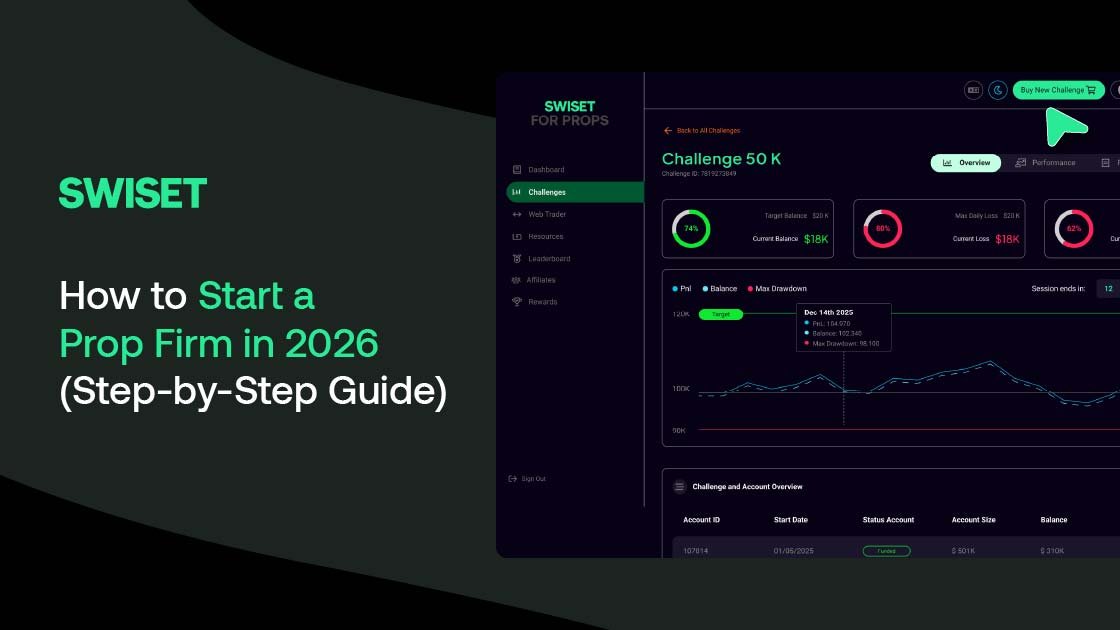
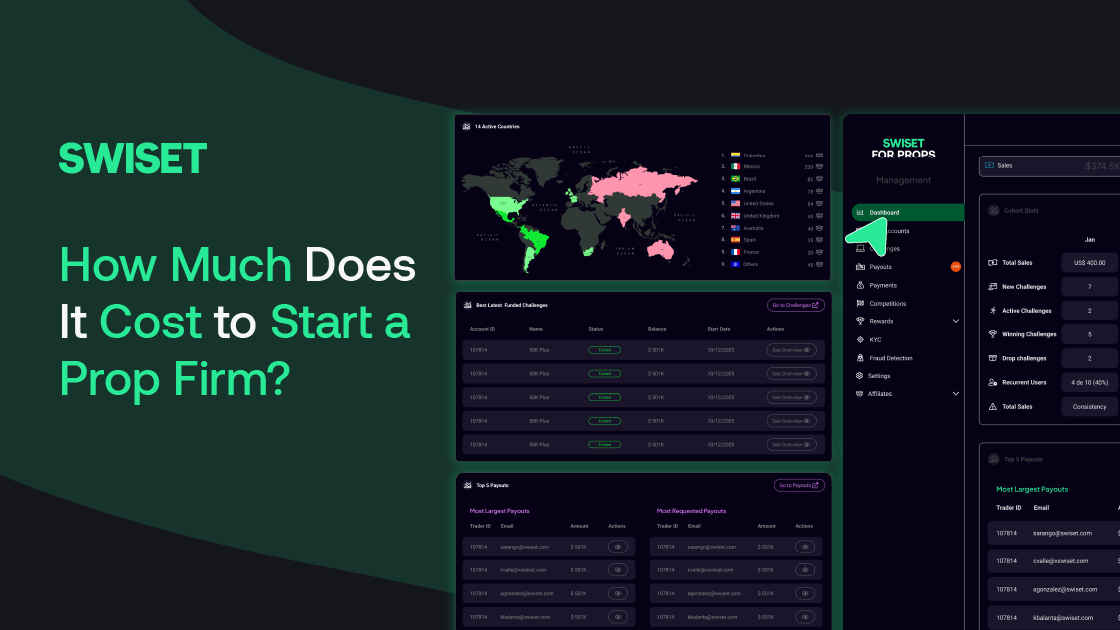
Trader and admin dashboards.
Automated trading account setup.
Real-time challenge rule validation.
KYC integrations.
Payment gateways.
Payout eligibility.
Fraud detection.
Risk management.
Affiliate systems.
Third-party integrations.
What had once been primarily a trader-facing product was now helping companies operate entire trading businesses.
Today, Swiset’s infrastructure has supported more than 50 prop firms and 100,000+ active accounts, with clients operating across more than 140 countries.
As the platform evolved, another shift happened.
Trading businesses didn’t necessarily need another isolated piece of software.
They needed technology that could connect with the systems they already used.
Commercial websites.
CRMs.
Payment providers.
Trading platforms.
Liquidity providers.
Affiliate systems.
Communication tools.
Internal workflows.
The question changed again.
It was no longer:
“What feature should we build?”
It became:
“How does this fit into the client’s technology stack?”
That shift pushed Swiset further toward APIs, integrations, automation, and modular infrastructure.
Instead of forcing every company into the same operating model, the technology could increasingly become part of the infrastructure behind their existing business.
There is another advantage to building closer to the infrastructure layer: context.
Once systems understand trading activity, account behavior, risk, competition performance, and operational events, data can become much more useful.
Not simply as another dashboard.
But as an input for action.
This is where AI and behavioral intelligence become the next layer of Swiset’s evolution.
The goal is increasingly to help businesses move from:
data → insight → action.
Identifying patterns.
Understanding trader behavior.
Detecting risk.
Personalizing experiences.
Automating workflows.
And eventually enabling technology to participate more actively in the trader journey.
AI becomes more valuable when it understands the environment in which the trader operates.
And that environment is exactly what Swiset has spent years building around.
The trading journal taught us how traders behave.
Communities taught us how traders engage.
Competitions taught us how engagement can drive acquisition and activity.
Prop firms taught us how complex trading operations become at scale.
APIs taught us that infrastructure needs to be flexible.
And AI is showing us what becomes possible when all those layers work together.
The product has changed significantly.
The original problem hasn’t.
Build better technology around the trader experience.
The difference is that today, solving that problem means building not only for traders—but also for the companies serving them.
From a trading journal to B2B technology infrastructure.
Not one pivot.
A natural evolution.

A well-designed competition gives brokers a way to create visible progress, repeated participation, and measurable trader behavior.


A well-designed competition gives brokers a way to create visible progress, repeated participation, and measurable trader behavior.

A well-designed competition gives brokers a way to create visible progress, repeated participation, and measurable trader behavior.
Over the past few years, prop firms have become one of the fastest-growing business models in the trading industry.

A well-designed competition gives brokers a way to create visible progress, repeated participation, and measurable trader behavior.

Why Are Brokers Starting Their Own Prop Firms? Linkedin Huge-global Youtube Over the past few

Do Prop Firms Use Real Money?- The prop firm business model explained (without the myths)

How to choose a Tech Provider for your Prop Firm And why prop firms switch
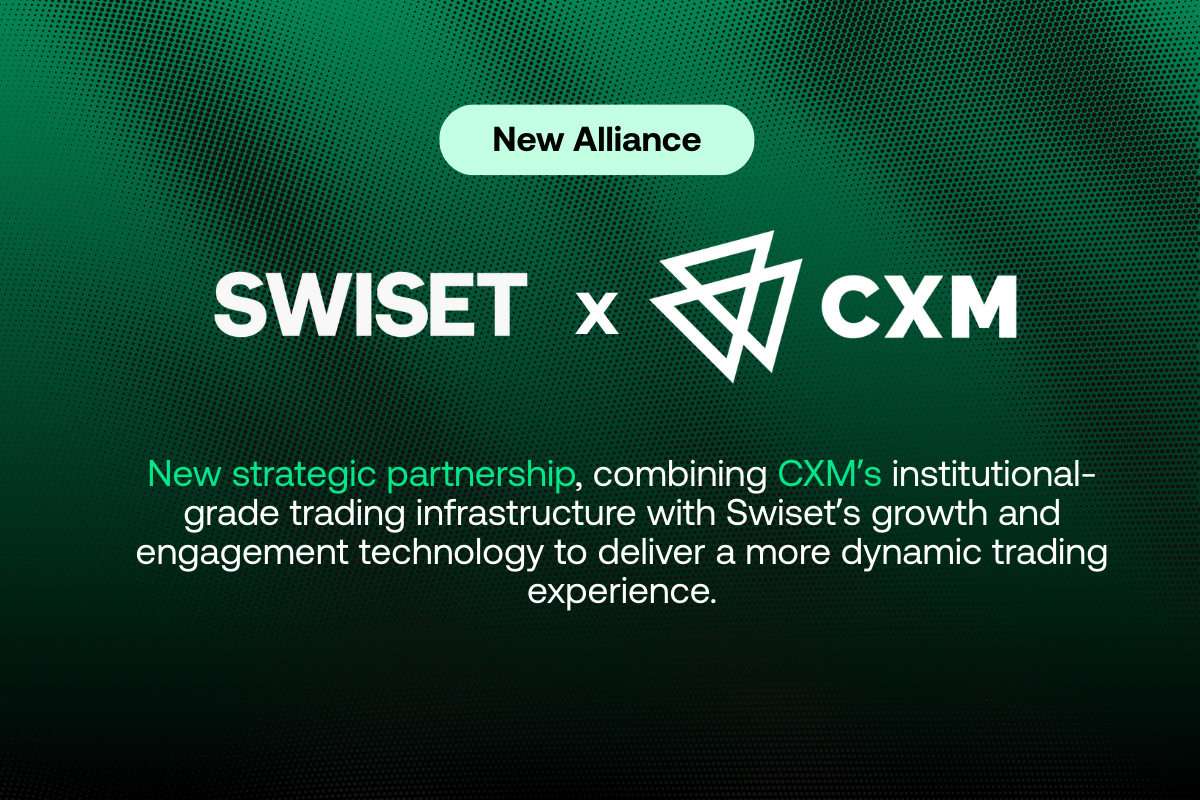
CXM Partnership Announcement | Swiset Content CXM is pleased to announce a new strategic partnership

How Brokers Are Rethinking Value Beyond Pricing and Execution Why differentiation in brokerage is shifting
| Cookie | Duration | Description |
|---|---|---|
| cookielawinfo-checkbox-analytics | 11 months | This cookie is set by GDPR Cookie Consent plugin. The cookie is used to store the user consent for the cookies in the category "Analytics". |
| cookielawinfo-checkbox-functional | 11 months | The cookie is set by GDPR cookie consent to record the user consent for the cookies in the category "Functional". |
| cookielawinfo-checkbox-necessary | 11 months | This cookie is set by GDPR Cookie Consent plugin. The cookies is used to store the user consent for the cookies in the category "Necessary". |
| cookielawinfo-checkbox-others | 11 months | This cookie is set by GDPR Cookie Consent plugin. The cookie is used to store the user consent for the cookies in the category "Other. |
| cookielawinfo-checkbox-performance | 11 months | This cookie is set by GDPR Cookie Consent plugin. The cookie is used to store the user consent for the cookies in the category "Performance". |
| viewed_cookie_policy | 11 months | The cookie is set by the GDPR Cookie Consent plugin and is used to store whether or not user has consented to the use of cookies. It does not store any personal data. |
Select the type of Demo you want to request