

What 2025 Taught Us About Sustainable Growth in Trading Firms
Why the industry is shifting from fast expansion to long-term operational strength.
- 6 min
- Manuela Palacio
Content
Introduction: Growth Was Easy. Sustainability Was Not.
For much of the last decade, growth in the trading industry followed a familiar formula: launch fast, acquire aggressively, scale volume, and optimize later.
2025 challenged that model.
According to the Swiset Annual Trading & Investment Industry Report 2025, many trading firms reached scale faster than their operational foundations could support. The result was not a collapse of demand, but a clear separation between firms built for speed and firms built for longevity.
Sustainable growth, once considered a long-term concern, became an immediate strategic priority.
1. Growth Exposed Structural Weaknesses
One of the most consistent findings in 2025 was that growth amplified existing weaknesses.
As user bases expanded, firms faced:
Platform instability under peak demand
Inconsistent rule enforcement
Delayed reporting and payouts
Rising customer support costs
The data shows that these issues were not isolated incidents. They were systemic outcomes of scaling without proportional investment in infrastructure and governance.
The key lesson: growth does not create problems, it reveals them.
2. Operational Maturity Became a Competitive Advantage
In previous years, operational excellence was often treated as a cost center. In 2025, it became a differentiator.
The report highlights that firms with:
Clear internal processes
Scalable infrastructure
Defined risk and compliance frameworks
were significantly better positioned to absorb growth without erosion of trust or performance.
In contrast, firms that relied on manual processes or fragmented systems struggled to maintain consistency as volume increased.
Sustainable growth increasingly depends on repeatable, well-defined operations, not just strong acquisition channels.
3. Trust Shifted From Brand Messaging to System Performance
One of the most important shifts observed in 2025 was how trust is built and lost.
Retention data analyzed in the report shows that trust correlated more strongly with:
Platform reliability
Transparency of rules and metrics
Predictability of outcomes
and less with:
Promotions
Discounts
Short-term incentives
In practical terms, traders and partners evaluated firms based on how systems behaved under stress, not how brands communicated during onboarding.
Trust became an output of operational consistency, not a marketing promise.
4. Technology Decisions Had Long-Term Consequences
Another clear insight from 2025 is that early technology choices compound over time.
The report documents how firms with:
Rigid platforms
High technical debt
Limited interoperability
faced increasing difficulty adapting to regulatory changes, new products, or shifts in user behavior.
Meanwhile, firms that invested early in modular, flexible architectures were able to:
Adjust rules dynamically
Integrate new tools faster
Reduce downtime and operational friction
Sustainable growth increasingly depends on technology as an enabler, not a bottleneck.
5. Sustainable Growth Required Slowing Down to Speed Up
Perhaps the most counterintuitive lesson of 2025 is that firms that paused to reassess structure often performed better long-term than those that continued accelerating without adjustment.
The report identifies a pattern where firms that:
Revisited internal workflows
Strengthened risk and compliance processes
Invested in analytics and visibility
were able to resume growth with greater confidence and resilience.
In contrast, firms that avoided these conversations often faced more severe disruptions later.
Sustainable growth proved to be less about momentum, and more about intentional pacing.
What This Means Going Into 2026
The data from 2025 makes one thing clear: the next phase of growth in the trading industry will reward firms that combine scale with structure.
Key strategic implications include:
Treating operations and infrastructure as growth drivers
Measuring trust through performance, not perception
Designing systems that adapt as volume increases
Prioritizing long-term resilience over short-term acceleration
Sustainable growth is no longer a future aspiration. It is a present requirement.
Conclusion: Growth That Lasts Looks Different
2025 did not signal the end of growth in trading. It redefined it.
Firms that internalize the lessons of the past year are better positioned to build businesses that scale responsibly, maintain trust, and adapt to an increasingly complex environment.
Those that don’t may continue to grow—but at a cost that becomes harder to recover from.
Download the Full Industry Report
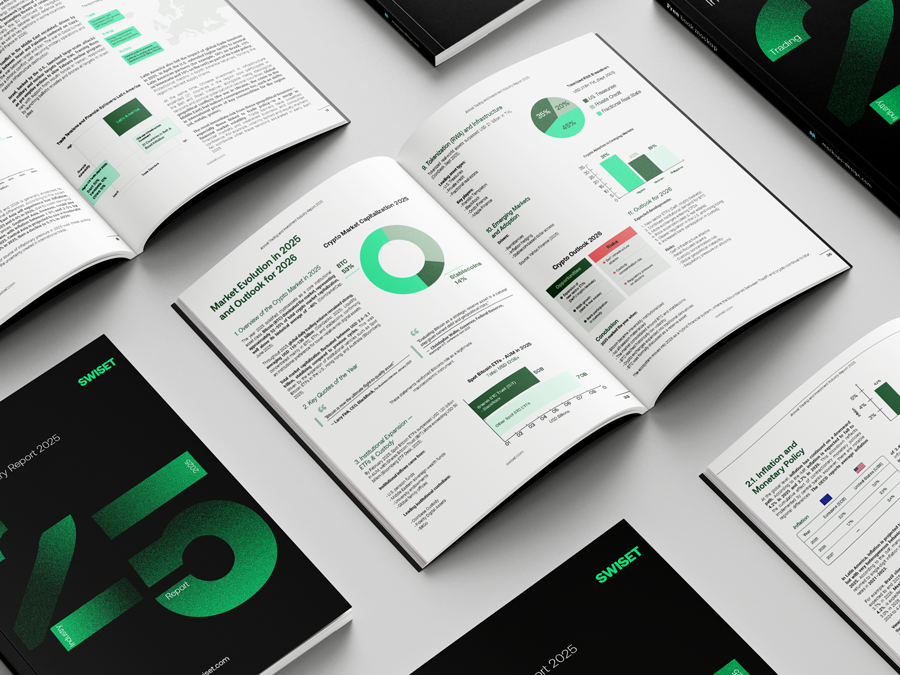
This article is based on insights from the Swiset Annual Trading & Investment Industry Report 2025, which includes deeper data analysis, charts, and strategic frameworks covering:
Market structure and consolidation
Technology and infrastructure trends
Risk, compliance, and regulation
Broker and prop firm models
2026 outlook and strategic recommendations
 Download the full report to explore the complete data and insights.
Want to see how these insights translate into execution?
We can walk you through how Swiset helps trading firms apply these principles in practice.