


Why Risk Management Is No Longer a Back-Office Function
How trading firms are moving risk from compliance to core infrastructure.
- 6 min
- Manuela Palacio
Content
Introduction: Risk Used to Be Invisible
or years, risk management in trading firms lived quietly in the background.
It was treated as:
A compliance requirement
A post-trade review process
A support function detached from growth
In 2025, that model stopped working.
According to the Swiset Annual Trading & Investment Industry Report 2025, rising volume, increasing trader sophistication, and stricter regulatory expectations forced firms to confront a new reality: risk can no longer be managed after the fact.
It has to be embedded into how the business operates.
1. Growth Made Reactive Risk Models Unsustainable
As trading firms scaled, reactive risk management created friction and blind spots.
The report highlights recurring issues among fast-growing firms:
Exposure detected too late
Manual reviews that didn’t scale
Inconsistent rule enforcement across users
Limited visibility during peak trading activity
These were not failures of intent, but of design.
Risk systems built for small volumes broke under scale.
The data shows that risk issues rarely start big, but when unmanaged, they compound quickly.
2. Risk Directly Impacts Trust and Retention
One of the most important insights from 2025 is how closely risk management is tied to trust.
Trader behavior analyzed in the report shows stronger retention when firms provided:
Clear and predictable rules
Transparent performance metrics
Consistent enforcement across accounts
Conversely, poor risk handling led to:
Confusion around disqualifications
Perceived unfair treatment
Rapid loss of confidence
Risk management stopped being an internal concern.
It became a user-facing experience.
3. From Compliance Function to Product Capability
High-performing firms in 2025 treated risk differently.
Instead of isolating it within compliance teams, they embedded risk management into:
Trading rules
Real-time monitoring systems
Automated alerts
Behavioral analytics
This shift allowed firms to:
Detect exposure earlier
Enforce rules consistently
Reduce operational bottlenecks
Risk became part of the product, not just the process.
4. Real-Time Risk Became a Strategic Requirement
The report shows a clear distinction between firms using:
Post-trade reviews
vsReal-time risk monitoring
Firms operating in real time were better positioned to:
Prevent cascading losses
Respond to abnormal behavior
Maintain system stability under stress
In an environment where markets move fast and volumes are high, delayed risk signals are effectively useless.
Real-time visibility became a strategic advantage.
5. Fraud and Rule Circumvention Accelerated the Shift
Another major driver behind this transformation was fraud.
According to the report, 2025 saw an increase in:
Repeated rule circumvention
Coordinated account behavior
Exploitation of static rules
Traditional manual reviews struggled to keep up.
Firms that invested in behavioral analysis and pattern detection were able to:
Identify risk clusters earlier
Reduce false positives
Protect legitimate traders
Risk management evolved from rule checking to behavior interpretation.
What This Means for Trading Firms Going Into 2026
The data from 2025 makes the direction clear.
Risk management going forward will require:
Automation over manual reviews
Real-time visibility over delayed reporting
Consistent enforcement over discretionary decisions
Integration with core systems over isolated tools
Firms that continue treating risk as a back-office function will face growing operational and reputational pressure.
Those that embed risk into their infrastructure will scale with confidence.
Conclusion: Risk Is Now a Strategic Lever
Risk management is no longer about avoiding losses.
It’s about enabling growth.
In 2025, the most resilient trading firms proved that when risk is visible, automated, and embedded into operations, it becomes a stabilizing force rather than a constraint.
The industry is not becoming more conservative.
It’s becoming more intentional.
Download the Full Industry Report
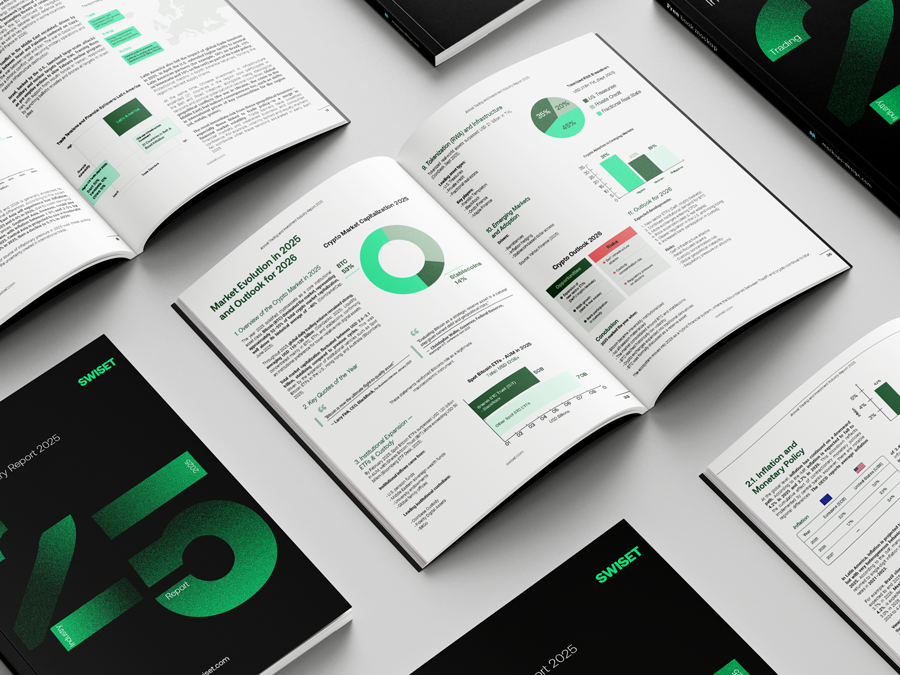
This article is based on insights from the Swiset Annual Trading & Investment Industry Report 2025, which includes deeper data analysis, charts, and strategic frameworks covering:
Market structure and consolidation
Technology and infrastructure trends
Risk, compliance, and regulation
Broker and prop firm models
2026 outlook and strategic recommendations
 Download the full report to explore the complete data and insights.
Want to see how these insights translate into execution?
We can walk you through how Swiset helps trading firms apply these principles in practice.