


The Prop Firm Boom Is Over — What the Data Shows About What Comes Next
Why the industry is moving from rapid launches to operational survival.
- 6 min
- Manuela Palacio
Content
Introduction: The End of Easy Growth
Between 2021 and 2024, the prop firm industry experienced explosive growth.
Launching a prop firm became faster, cheaper, and more accessible than ever before.
In 2025, that dynamic changed.
According to the Swiset Annual Trading & Investment Industry Report 2025, the market did not lose demand. Instead, it reached a point where structural weaknesses became impossible to ignore. The result was not a crash, but a clear transition from expansion to selection.
The boom phase ended.
The maturity phase began.
Growth Exposed the Fragility of Many Prop Firms
One of the most consistent findings in the 2025 data is that scale revealed fragility.
As prop firms increased trader volume, they faced:
Platform instability during peak trading hours
Inconsistent rule enforcement
Delays in reporting and payouts
Rising fraud and rule circumvention attempts
These challenges were not anomalies. They were predictable outcomes of scaling without proportional investment in infrastructure, risk systems, and governance.
The lesson was clear: growth magnifies weaknesses faster than it creates strengths.
Launching a Prop Firm Was Easy — Sustaining One Was Not
During the boom years, barriers to entry were low. Many firms prioritized speed to market over long-term design.
In 2025, that approach proved costly.
The report highlights that firms relying on:
Manual processes
Fragmented tools
Static rule systems
struggled to operate efficiently once trader volume increased.
In contrast, prop firms built with:
Automated rule enforcement
Real-time risk monitoring
Centralized performance analytics
were significantly more resilient under stress.
The market stopped rewarding launches.
It started rewarding operational readiness.
Risk Management Moved to the Core of the Business
One of the most important structural shifts observed in 2025 was the repositioning of risk.
Risk management is no longer:
A compliance checkbox
A post-trade review process
A back-office responsibility
According to the report, high-performing prop firms embedded risk directly into:
Trading rules
Real-time monitoring systems
Behavioral analysis frameworks
This shift allowed firms to detect exposure earlier, enforce rules consistently, and reduce costly edge cases at scale.
Risk became a product capability, not just an internal function.
Trust Became the Primary Retention Driver
Trader retention patterns in 2025 showed a notable shift.
Retention correlated more strongly with:
Predictability of rules
Transparency of metrics
Reliability of systems
and less with:
Challenge pricing
Promotions
Short-term incentives
In other words, traders stayed where the system behaved consistently, especially under pressure.
Trust became an outcome of system performance, not marketing promises.
Hybrid Models Emerged as the Sustainable Middle Ground
The data also reveals a structural correction in prop firm models.
Pure simulation models struggled with monetization depth.
Pure live trading models struggled with scalability and risk.
As a result, many firms moved toward hybrid models that balance:
Evaluation and development phases
Risk-controlled capital allocation
Progressive access to scale
This shift was not driven by trends, but by operational necessity.
Hybrid models proved more adaptable to regulatory pressure, trader behavior, and growth constraints.
What This Means for Prop Firms Going Into 2026
The post-boom phase is not about shrinking the market.
It’s about redefining what “good” looks like.
The 2025 data suggests that sustainable prop firms going forward will prioritize:
Infrastructure over speed
Automation over manual processes
Transparency over incentives
Governance over improvisation
The firms that survive and grow will not be the ones that launched fastest, but the ones that built correctly.
Conclusion: The Boom Ended. The Real Work Started.
The prop firm boom created visibility, innovation, and momentum.
2025 introduced accountability.
As the industry matures, success will be defined less by how quickly a firm can attract traders, and more by how reliably it can operate, enforce rules, manage risk, and maintain trust at scale.
The next phase of growth belongs to builders, not opportunists.
Download the Full Industry Report
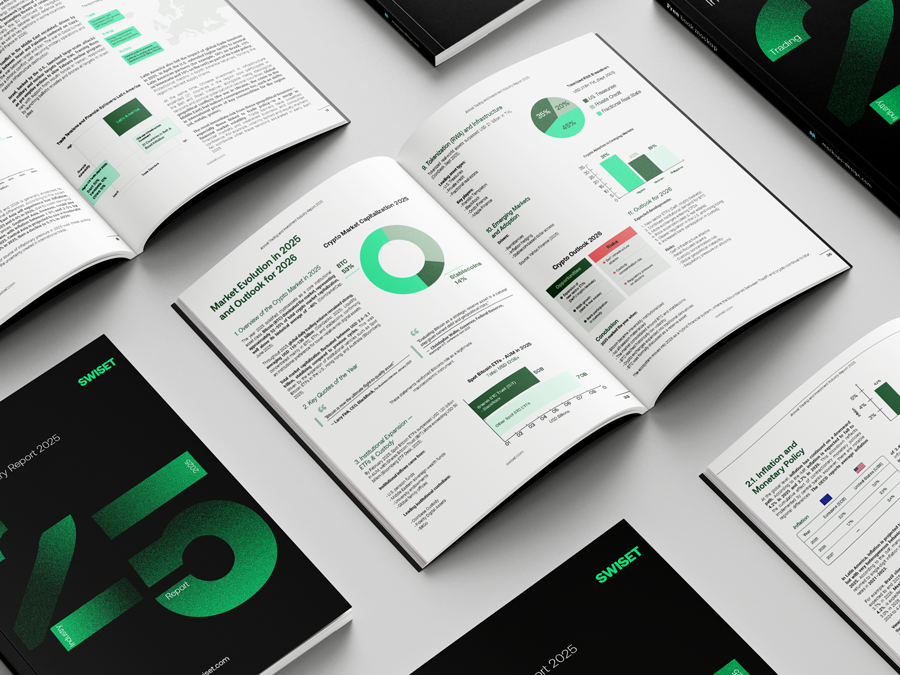
This article is based on insights from the Swiset Annual Trading & Investment Industry Report 2025, which includes deeper data analysis, charts, and strategic frameworks covering:
Market structure and consolidation
Technology and infrastructure trends
Risk, compliance, and regulation
Broker and prop firm models
2026 outlook and strategic recommendations
 Download the full report to explore the complete data and insights.
Want to see how these insights translate into execution?
We can walk you through how Swiset helps trading firms apply these principles in practice.