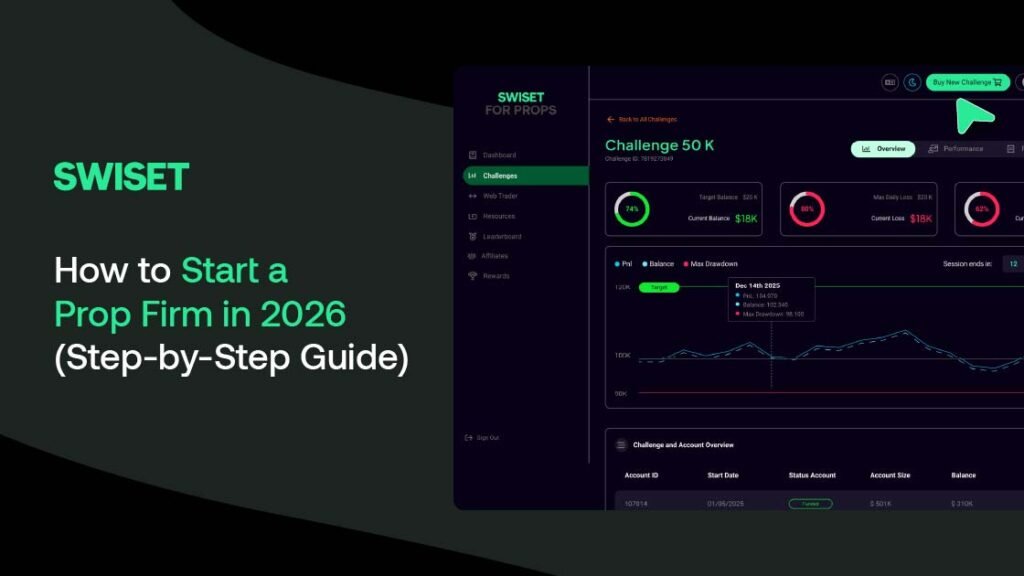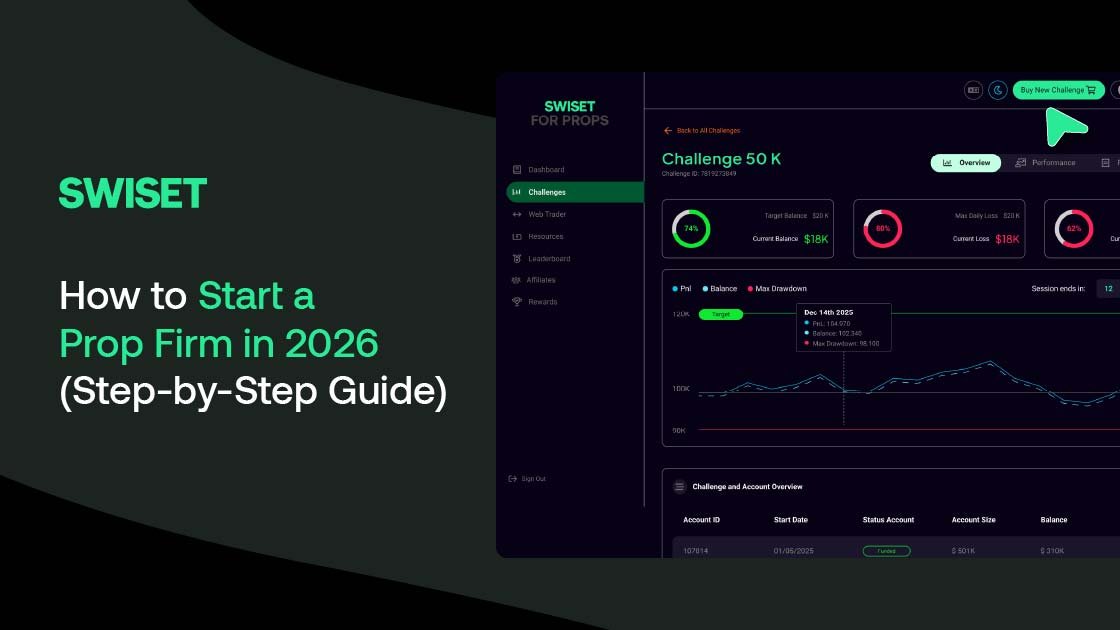
How to Start a Prop Firm in 2026 (Step-by-Step Guide)

A complete guide to launching and scaling a proprietary trading firm

trading competitions
trading tournament
white label
competitions software
technology for trading competitions
how to create trading competitions
how to do a trading tournament
demo trading competitions software
white label live trading tournament platform
poker a like trading competitions

Over the last few years, prop firms have become one of the fastest-growing business models in the trading industry.
Thousands of traders now participate in funded trading programs, attempting to prove their skills in order to gain access to larger capital.

This surge in demand has led many entrepreneurs, brokers, and trading communities to ask the same question:

How do you actually start a prop firm?

Launching a proprietary trading firm today involves much more than creating a website and selling trading challenges. It requires the right combination of technology, risk management, infrastructure, and trader acquisition strategy.

In this guide, we’ll break down the process step by step.

What Is a Prop Firm?

A proprietary trading firm allows traders to access larger capital by proving their trading skills through an evaluation process.

Instead of depositing their own funds, traders typically:

  1. Purchase a trading challenge
  2. Trade under predefined risk rules
  3. Reach a profit target while respecting drawdown limits
  4. Receive a funded account if they pass the evaluation

The firm then shares profits with the trader based on a predefined split.

This model has grown rapidly because it aligns the interests of both parties:

  • traders gain access to capital
  • firms identify and monetize trading talent

Why Prop Firms Are Growing So Fast

Several industry trends are driving the rapid growth of prop firms:

Lower barriers to entry for traders

Funded accounts allow traders to access capital without risking large personal deposits.

Gamified trading progression

Challenges, leaderboards, and milestones create engagement similar to gaming systems.

Global online distribution

Trading communities, affiliates, and social media allow prop firms to reach traders worldwide.

Recurring demand for evaluations

Many traders attempt multiple challenges before passing.

These dynamics have created a powerful business model that combines trader acquisition, engagement, and monetization.

Step 1: Define Your Prop Firm Business Model

Before launching a prop firm, you need to define how your program will work.

Some of the most common elements include:

Evaluation structure

Many firms use either:

  • 1-phase evaluation
  • 2-phase evaluation
  • Instant funding models

Each structure impacts trader conversion and risk exposure.


Profit splits

Common payout splits include:

  • 70/30
  • 80/20
  • 90/10

Higher splits attract traders but may require stronger risk controls.


Risk rules

Prop firms usually enforce rules such as:

  • maximum daily loss
  • maximum drawdown
  • profit targets
  • trading consistency rules

These rules determine how traders qualify for funding.

Step 2: Build the Technology Infrastructure

Technology is one of the most critical components of launching a prop firm.

Behind every successful prop firm is a platform capable of managing the entire trader lifecycle.

This includes:

  • challenge creation and management
  • rule validation engines
  • drawdown monitoring
  • trader dashboards
  • admin dashboards
  • account provisioning
  • fraud detection systems

Without reliable infrastructure, operating and scaling a prop firm becomes extremely difficult.

Because of this complexity, many companies choose to rely on specialized prop firm technology providers instead of building everything internally.


Step 3: Set Up Trading Infrastructure

Prop firms need a trading environment where participants can execute trades.

This usually involves:

  • integration with trading platforms
  • broker relationships
  • liquidity providers
  • account management systems

The trading environment must support the rules defined in the evaluation process and allow real-time monitoring of trader performance.

Step 4: Implement Risk Management Systems

Risk management is one of the most important aspects of operating a prop firm.

Even if the majority of traders fail evaluations, firms must still control exposure carefully.

Key risk systems typically include:

  • drawdown monitoring
  • position exposure tracking
  • rule violation detection
  • automated account suspension when rules are broken

Effective risk management ensures that the prop firm can scale while maintaining financial stability.

Launch and Scale Your Prop with Swiset's Technology

See how Swiset can help leaders like you create your own Prop without operational complexity.

Step 5: Create the Trader Experience

Successful prop firms focus heavily on user experience.

Traders expect a clear and intuitive journey from challenge purchase to funded accounts.

Key components of the user experience include:

  • a professional commercial website
  • seamless challenge purchase flow
  • trader dashboards with real-time statistics
  • clear progress tracking during evaluations
  • transparent payout processes

The smoother this journey is, the more likely traders are to participate repeatedly.

Step 6: Set Up Payments and Payout Systems

Prop firms need reliable infrastructure for both incoming payments and trader payouts.

Typical payment components include:

  • challenge purchases
  • payment gateway integrations
  • affiliate commissions
  • trader payouts

Automating these processes is essential for scaling operations.

Step 7: Acquire Traders

Once the infrastructure is ready, the next challenge is attracting traders.

Most successful prop firms rely on multiple acquisition channels:

Trading communities

Online trading communities are one of the most powerful distribution channels.

Affiliate programs

Affiliate networks help prop firms reach large audiences quickly.


Content and education

Educational content, social media, and YouTube channels often serve as major traffic drivers.


Competitions and leaderboards

Competitions can create engagement and attract traders interested in testing their performance.

Step 8: Prevent Fraud and Abuse

As the prop firm industry grows, fraud prevention has become increasingly important.

Some common issues include:

  • copy trading between accounts
  • latency arbitrage
  • account sharing
  • automated strategies designed to exploit rules

To protect the integrity of the program, prop firms need fraud detection and monitoring systems capable of identifying suspicious behavior.

Common Mistakes When Launching a Prop Firm

Many new prop firms underestimate the complexity of operating this model.

Some common mistakes include:

Underestimating technology requirements

Building internal systems without specialized expertise can delay launches significantly.


Weak risk management

Without strong rule enforcement, financial exposure can increase quickly.


Poor user experience

Confusing dashboards or unclear rules often lead to trader churn.


Lack of fraud controls

Fraud can damage the reputation of a prop firm and increase operational risk.

The Future of Prop Firms

The prop firm industry is still evolving.

As the market matures, we are likely to see:

  • deeper integration with brokers
  • more advanced risk analytics
  • stronger fraud detection tools
  • improved trader experiences

Technology will play a central role in enabling firms to scale globally.

Conclusion

Starting a prop firm in 2026 is an opportunity — but it requires the right infrastructure and strategy.

Successful prop firms typically combine:

  • robust technology platforms
  • strong risk management
  • seamless trader experiences
  • effective trader acquisition strategies

The companies that succeed will be those that treat prop firms not just as trading programs, but as technology-driven financial platforms.

Launch Your Prop Firm Faster

If you’re exploring how to start a prop firm, building the entire infrastructure from scratch can take months — or even years.

Solutions like Swiset for Props provide a turnkey platform designed specifically for launching and scaling proprietary trading firms.

With tools such as:

  • rule validation engines
  • trader and admin dashboards
  • fraud detection systems
  • payout management
  • competitions and leaderboards

firms can focus on growing their trading community instead of building complex infrastructure.

About Swiset

Swiset builds technology for prop firms, brokers, and trading businesses that require flexibility, scalability, and operational clarity.

If you are evaluating a change in your technology stack, our team is open to a conversation.

FAQs

The cost varies depending on technology, marketing, and infrastructure. Many firms spend tens or hundreds of thousands of dollars building the necessary systems.

Most prop firms operate in partnership with brokers or trading platforms that provide execution and liquidity.

It can be profitable, but success depends on technology, risk management, trader acquisition, and operational efficiency.

Related Posts

Use Case

Growth Engine For Brokers

Why Gamification Is a Growth Engine for Brokers How structured IB engagement drives sustainable volume

Use Case

Marketing Solutions for Props

Why Marketing Automation Is Critical for Prop Firm Growth How embedded recovery systems turn failed

Use Case

Scaling Trader Engagement

Scaling Trader Engagement with Demo Trading Competitions: The Pepperstone Use Case Content Broker Overview Pepperstone

Blog

Swiset and TopFX

Swiset and TopFX Announce Strategic Alliance to Accelerate Trader Growth and Drive Innovation Across the