


How Brokers Are Rethinking Value Beyond Pricing and Execution
Why differentiation in brokerage is shifting from cost to experience, structure, and growth enablement
- 6 min
- Manuela Palacio
Content
Introduction: When Everything Looks the Same, Value Has to Change
For years, broker competition followed a predictable path:
tighter spreads, faster execution, lower fees.
That strategy worked — until it didn’t.
According to the Swiset Annual Trading & Investment Industry Report 2025, pricing and execution quality have reached a point of market convergence. For most traders, these elements are now expected, not differentiating.
As a result, brokers are being forced to answer a new question:
If everyone competes on price and speed, where does real value come from?
1. Pricing and Execution Became Table Stakes
Data from 2025 shows that most established brokers already operate within a narrow competitive range on:
Spreads
Latency
Execution quality
While these factors remain critical, they no longer drive long-term loyalty on their own.
The report highlights that brokers who relied exclusively on pricing-based differentiation experienced:
Lower retention rates
Higher sensitivity to competitor promotions
Limited brand defensibility
Cost-based competition proved easy to copy — and difficult to sustain.
2. Brokers Began Competing on Experience, Not Just Access
As pricing converged, brokers started shifting focus toward how traders experience the platform.
High-performing brokers invested in:
Clearer performance reporting
More intuitive dashboards
Faster feedback loops
Better visibility into risk and behavior
The report shows that traders increasingly value platforms that help them understand their performance, not just execute trades.
Execution became the entry point.
Experience became the differentiator.
3. Trader Development Emerged as a Value Driver
One of the clearest shifts in 2025 was how brokers approached trader progression.
Instead of treating traders as interchangeable accounts, leading brokers began focusing on:
Skill development pathways
Performance benchmarking
Progress-based incentives
The data suggests that brokers offering structured development tools saw:
Longer trader lifecycles
Higher engagement
Stronger emotional attachment to the platform
Value shifted from “where can I trade cheapest?” to
“where can I grow more effectively?”
4. Engagement Replaced Incentives as a Retention Mechanism
Traditional incentives — bonuses, rebates, promotions — showed diminishing returns in 2025.
According to the report, retention correlated more strongly with:
Engagement mechanics
Community participation
Visibility of progress and ranking
Brokers that introduced:
Competitions
Performance challenges
Gamified progression systems
were able to increase engagement without increasing risk.
Engagement proved more sustainable than incentives.
5. Data Transparency Became a Trust Signal
Another important insight from 2025 is the role of transparency.
Traders increasingly favored brokers that provided:
Clear metrics
Consistent rule enforcement
Easy-to-understand performance analytics
Opaque systems and delayed reporting eroded trust, even when pricing was competitive.
Transparency stopped being a compliance requirement.
It became a value signal.
6. Brokers Started Enabling Ecosystems, Not Just Accounts
The report also highlights a structural shift in how brokers view growth.
Instead of focusing solely on individual traders, many brokers began investing in:
IB networks
Trading communities
Educational partners
This required tools that could:
Track partner performance
Measure engagement at scale
Support multiple growth channels simultaneously
Brokers that enabled ecosystems, rather than isolated accounts, unlocked more scalable growth.
What This Means for Brokers Going Into 2026
The data from 2025 suggests a clear direction.
Brokers that succeed in the next phase will:
Treat pricing and execution as baseline expectations
Differentiate through experience, transparency, and engagement
Invest in trader development and ecosystem support
Use data to build trust and long-term relationships
Value is no longer transactional.
It’s relational and structural.
Conclusion: The Broker Value Proposition Is Evolving
Pricing and execution will always matter.
But they are no longer enough.
As the brokerage industry matures, sustainable differentiation will come from how brokers support trader growth, enable engagement, and create clarity in an increasingly complex environment.
The brokers that adapt will move beyond competing on cost — and start competing on value.
Download the Full Industry Report
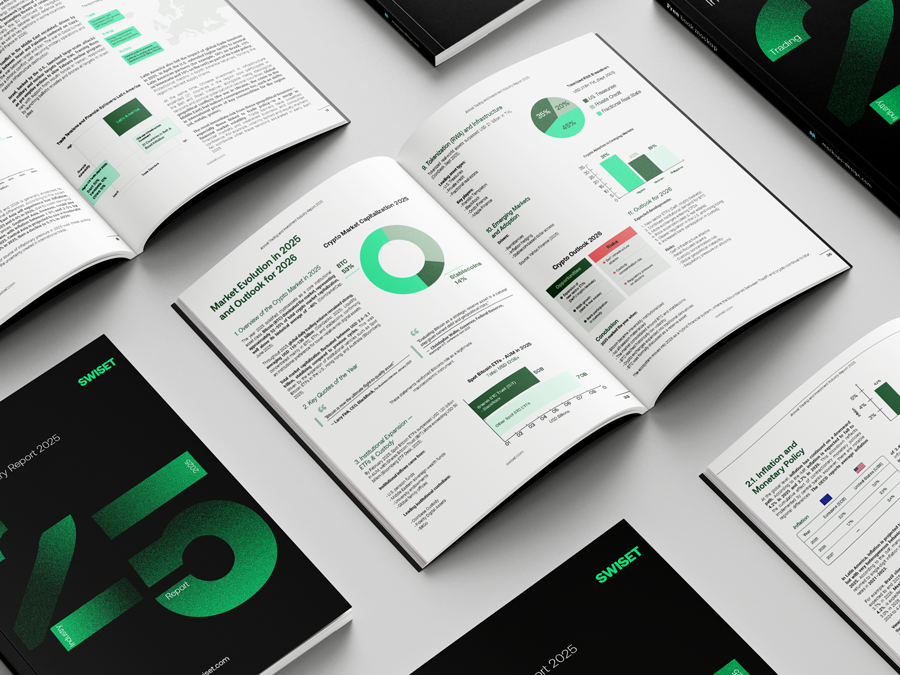
This article is based on insights from the Swiset Annual Trading & Investment Industry Report 2025, which includes deeper data analysis, charts, and strategic frameworks covering:
Market structure and consolidation
Technology and infrastructure trends
Risk, compliance, and regulation
Broker and prop firm models
2026 outlook and strategic recommendations
 Download the full report to explore the complete data and insights.
Want to see how these insights translate into execution?
We can walk you through how Swiset helps trading firms apply these principles in practice.